
Learn common reasons money tree leaves turn yellow indoors and how to adjust care carefully. Ordinary home conditions shape yellow leaves on a money tree: window direction, heating and cooling, pot size, and watering habits can all change the result.
A money tree can yellow from wet soil, dry spells, low light, cold drafts, or stress after a move, so the pot history matters. The useful goal is to make yellow leaves on a money tree a careful decision rather than a reaction to one symptom. Money trees are often sold in decorative containers, and those setups can hide drainage issues. A yellow leaf is easier to understand when you check the root zone and the recent routine together.
Before making a change, compare which leaf canopy is yellowing, whether the trunk feels firm, soil moisture below the surface, and drainage from the inner pot. These details give yellow leaves on a money tree a practical context and reduce the chance of fixing the wrong problem.
Start With The Evidence
First, look at which leaf canopy is yellowing. In this yellow leaves on a money tree situation, this detail reflects light, container size, soil texture, watering history, and season working together. Use this first observation in Why Are My Money Tree Leaves Turning Yellow? to decide what needs more checking before you adjust the routine.
Next, compare whether the trunk feels firm with the rest of the container. For yellow leaves on a money tree, the same clue can mean different things when the window, pot, and mix change. When judging yellow leaves on a money tree, the value is in the pattern, not in one isolated detail.
Also, include soil moisture below the surface in the diagnosis. With yellow leaves on a money tree, recent watering history and the current room explain why this clue should be compared with the whole setup. This keeps yellow leaves on a money tree connected to the actual room instead of a generic schedule.
Then, review drainage from the inner pot alongside the last watering date. For yellow leaves on a money tree, this observation is most useful when it is paired with drainage, soil texture, and the plant’s recent behavior. For yellow leaves on a money tree, a note about timing often explains why the plant changed.
Finally, confirm recent cold drafts or location changes before making a larger change. In this yellow leaves on a money tree situation, season and indoor temperature can change how quickly the same pot reacts. For yellow leaves on a money tree, that check helps separate a real problem from a normal adjustment.
Common Causes
A cachepot can hold runoff around the nursery pot and keep roots too wet. For yellow leaves on a money tree, this points back to the pot history rather than a single symptom. When checking yellow leaves on a money tree, review moisture, drainage, light, and recent changes before deciding whether to wait, water, move, or repot.
A dry spell can lead to limp leaves and scattered yellowing after the pot becomes very light. During a yellow leaves on a money tree check, this factor often shows up after a routine worked for a while and then the room changed. For the next yellow leaves on a money tree decision, compare the current conditions with the period when the plant looked steadier.
Low light slows water use and weakens recovery from stress. With yellow leaves on a money tree, the best response is to confirm whether this cause fits the evidence. If the evidence fits the yellow leaves on a money tree explanation, make the smallest useful correction and leave the rest of the setup stable.
Moving from store light to home light can cause older leaves to shed. For yellow leaves on a money tree, this cause is easy to miss because the visible leaf or soil surface may not show what is happening deeper in the pot. When judging yellow leaves on a money tree, check below the obvious sign before acting.

Step-by-Step Care Plan
- Check the inner pot for drainage and empty standing water. Connect this step to yellow leaves on a money tree by checking the result before the next watering or placement change.
- Water when the upper part of the root zone has dried appropriately, then drain fully. For yellow leaves on a money tree, one measured action is easier to evaluate than several fixes made together.
- Place the plant in bright indirect light away from cold drafts and heater blasts. Give money tree plants time to respond so the next choice is based on evidence, not impatience.
- Rotate the pot occasionally so growth does not lean hard toward one window. Keep the surrounding routine stable while you watch whether the yellow leaves on a money tree situation improves.
- Trim fully yellow leaves, but keep firm green leaves that help recovery. For yellow leaves on a money tree, note the date and condition afterward because the pattern matters more than a single check.
- Avoid major repotting until you know whether the container is the problem. Use the response to yellow leaves on a money tree to decide whether the correction was enough or whether a second change is needed later.
What To Avoid
Avoid watering because the braided trunk looks dry. With the current yellow leaves on a money tree setup, that habit can blur the evidence and make the next decision less reliable.
Avoid leaving the nursery pot in collected runoff. At this point in yellow leaves on a money tree, this usually adds another variable before the first one has been understood.
Avoid moving the plant from dim light to direct hot sun. If the yellow leaves on a money tree situation is already confusing, a dramatic reaction can make recovery harder to judge.
Avoid using fertilizer while the plant is stressed. For the yellow leaves on a money tree routine, a steadier approach is to keep the plant in reasonable conditions and watch the next round of growth.
What To Watch Over The Next Few Weeks
Watch for firm trunks. When checking yellow leaves on a money tree, this is a better progress signal than waiting for old damaged tissue to look new again.
Watch for new leaves with normal color. In the current yellow leaves on a money tree setup, new growth and a steadier drying rhythm usually tell you more than one old mark.
Watch for soil drying at a steady pace. Use that sign in Why Are My Money Tree Leaves Turning Yellow? to decide whether the current care pattern deserves more time before another change.
Watch for less leaf drop after the plant settles. If this sign appears in Why Are My Money Tree Leaves Turning Yellow? while new stress slows down, the plant is probably moving in a better direction.
Practical Notes For This Situation
For the next yellow leaves on a money tree decision, a short care note is useful because memory usually overestimates how recently a plant was watered, moved, or repotted. For yellow leaves on a money tree, write down the date, the soil feel, the pot weight, and the visible change. After two or three yellow leaves on a money tree checks, the pattern becomes easier to judge without guessing.
When judging yellow leaves on a money tree, separate old damage from new behavior. For yellow leaves on a money tree, a damaged leaf may stay damaged even after care improves, while new leaves and steadier stems show the current direction. For yellow leaves on a money tree, this prevents a beginner from repeating corrections just because an old mark remains visible.
At this point, the container matters as much as the amount of water added. For the yellow leaves on a money tree routine, a drainage hole, an emptied saucer, and a mix that dries at a reasonable pace give the plant more margin. If the pot involved in yellow leaves on a money tree hides water or stays wet for many extra days, adjust the setup before adding products.
When checking yellow leaves on a money tree, keep the first correction modest unless stems are soft, the mix smells sour, or the pot clearly cannot drain. A measured change gives yellow leaves on a money tree a fair test. If the plant involved in yellow leaves on a money tree keeps declining after the basic checks are corrected, then a second step such as repotting or moving the plant can be evaluated more clearly.
Beginner Review Checklist
For the next yellow leaves on a money tree decision, confirm the light before making a watering decision. For yellow leaves on a money tree, notice whether the plant is close enough to a usable window, whether direct sun is hitting the leaves, and whether the season has changed the strength or length of light. This keeps yellow leaves on a money tree connected to the energy the plant can actually use.
When judging yellow leaves on a money tree, confirm the container before blaming the plant. In this yellow leaves on a money tree situation, look for a drainage hole, trapped runoff, a pot that is much larger than the root ball, or a decorative cover that hides water. For yellow leaves on a money tree, these container details often decide whether a normal watering becomes a wet-soil problem.
For yellow leaves on a money tree, confirm the root-zone moisture rather than judging only the surface. For yellow leaves on a money tree, a finger check, wooden skewer, or careful pot-weight comparison gives better evidence than color alone. When yellow leaves on a money tree is confusing, the lower half of the pot usually tells the more important story.
For the routine, confirm whether the symptom is new or old. In this yellow leaves on a money tree situation, old damage can remain after the routine improves, while new leaves, firmer stems, steadier color, and a more predictable drying cycle show what is happening now. This keeps the advice from becoming a reaction to yesterday’s damage.
When checking the pot, confirm that only one major variable changes at a time. If you water, move, repot, prune, and fertilize during the same yellow leaves on a money tree adjustment period, the next result will be hard to interpret. A slower sequence gives the yellow leaves on a money tree correction a fair test and makes the next step clearer.
For the next decision, confirm the follow-up date before you finish. For yellow leaves on a money tree, decide when you will check the soil again, what sign would count as improvement, and what sign would justify a second correction. That final note turns yellow leaves on a money tree into a repeatable care process instead of a guess.
Frequently asked questions
Is one yellow money tree leaf normal?
One older leaf can yellow occasionally, but repeated yellowing needs a care check.
Should the soil dry completely?
Do not keep it constantly wet, but avoid letting the entire root ball stay bone dry for long periods.
Does a money tree need direct sun?
Bright indirect light is usually a better indoor target.
Can a decorative pot cause problems?
Yes, if it hides standing water around the nursery pot.
Should I cut the yellow leaves?
Remove fully yellow leaves after checking moisture and drainage.
Image disclosure
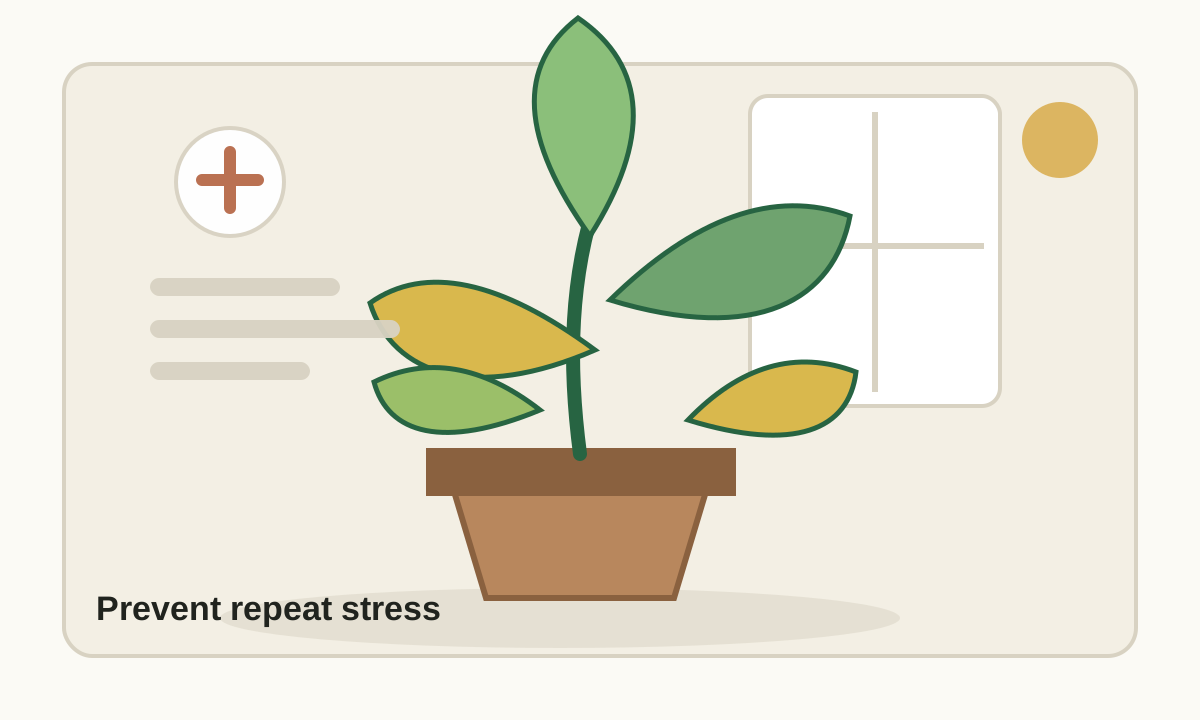
Images in this article are generated care illustrations used to explain plant conditions, environment differences, and care steps. Actual plant symptoms can vary depending on species, light, temperature, soil, watering habits, and season.
Disclaimer
This article is for general indoor plant care information. Plant responses vary by species, light, temperature, potting mix, container, watering habits, season, humidity, and local environment. Use the guidance as a practical starting point and adjust carefully for your own plant.